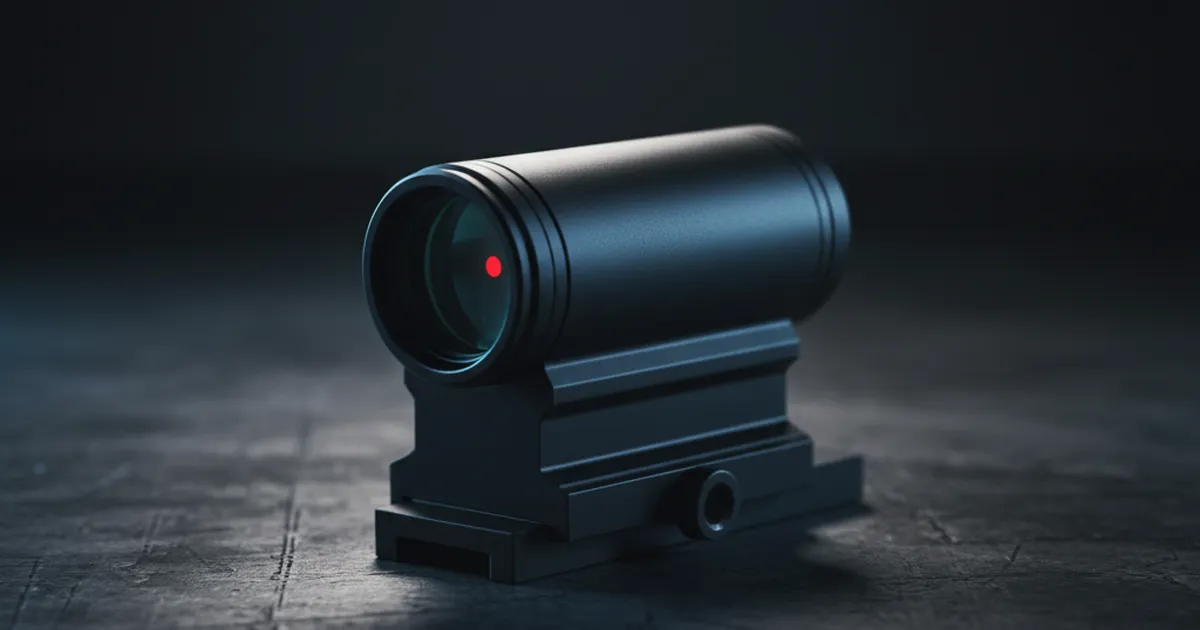

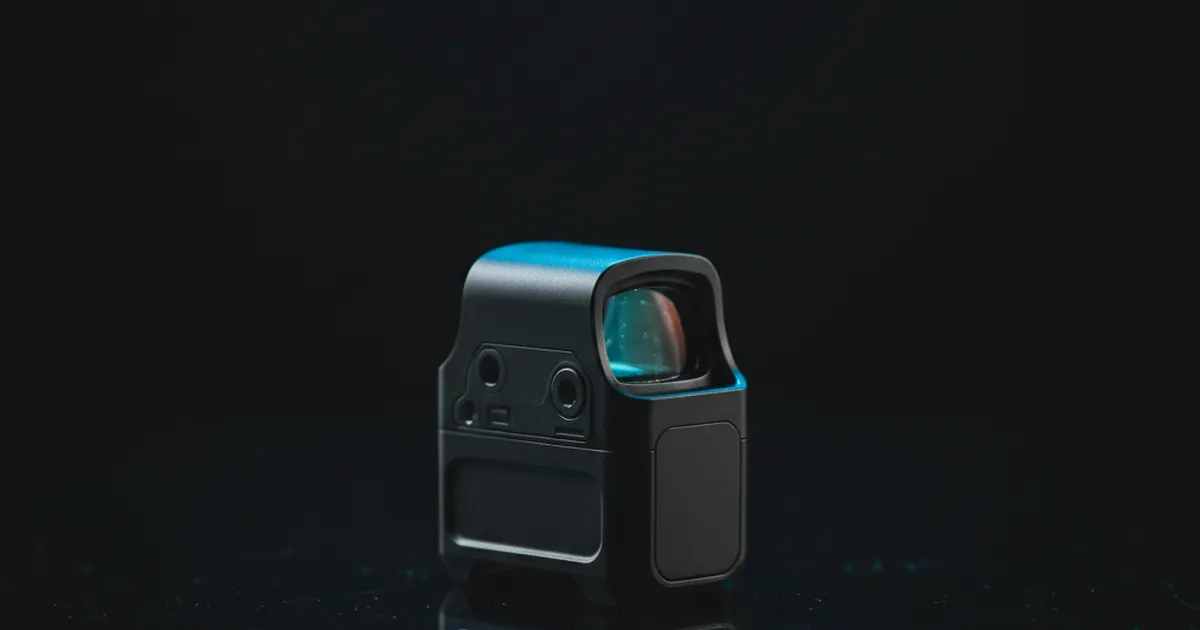


Putting a red dot on a pistol changes how fast you shoot and how well you see your target in low light — but only if the optic survives slide reciprocation and never quits when you need it. A pistol red dot is a compact reflex or micro sight mounted to a handgun's slide, projecting an illuminated aiming dot onto a lens so you aim with a single focal plane instead of lining up iron sights. The two decisions that matter most are the mounting footprint and whether the emitter is open or enclosed.
Key Takeaways
- Footprint first. RMR, RMSc/Shield, and Holosun-K are the common patterns. Match the optic to your slide cut or optics-ready plate before anything else.
- Open vs enclosed emitter is the durability call: enclosed emitters resist lint and debris occlusion on a carry gun; open emitters are smaller and cheaper.
- Shake-awake and 50,000-hour batteries solve the dead-dot problem; treat short battery life as a real downside on a defensive optic.
- Dot size: 2 MOA for precision, 3.25–6 MOA for fast close-range acquisition. Many sights offer a circle-dot for the best of both.
- Co-witness: suppressor-height iron sights let you confirm zero and serve as a backup if the dot ever fails.
How to Choose a Pistol Red Dot
Once the footprint fits your slide, rank the rest in this order:
- Emitter type. For a carry gun that rides in a holster and collects pocket lint, an enclosed emitter is the most reliable design — nothing can settle on the lens path. Open emitters are lighter and cheaper and fine for range and many carry users, but they're the more common failure point.
- Durability. A metal housing and a proven track record on hard-recoiling slides matter more than spec-sheet numbers. This is where the premium options justify their price.
- Power. Shake-awake (motion activation) plus a 50,000-hour battery means the dot is always ready without draining. Short battery life and no auto-on are real strikes against a defensive optic.
- Reticle. A 2 MOA dot is precise; a larger dot or a circle-dot is faster up close. Pick for your primary use.
| Optic | Footprint | Emitter | Battery | Price |
|---|---|---|---|---|
| Holosun EPS Carry | RMSc/Shield | Enclosed | 50,000 hr | ~$329.99 |
| Holosun 507C X2 | RMR | Open (+ solar) | 50,000 hr | ~$232.99 |
| Trijicon RMR Type 2 | RMR | Open | ~25–50k hr | ~$518–$559 |
| Accufire PCO-S | RMR | Open (+ solar) | Battery + solar | $249.99 |
| Accufire PCO Mini | RMSc-class | Open | Shake-awake | $179.99 |
| Sig RomeoZero Elite | RMSc/Shield | Open | 20,000 hr | ~$199.99 |
1. Holosun EPS Carry — Best for Carry
The Holosun EPS Carry (~$329.99) does the one thing most micro red dots can't: it puts a fully enclosed emitter on a true RMSc/Shield carry footprint. That sealed design means lint, dust, and debris can't settle in the emitter path and occlude the dot — the exact failure that bites open-emitter optics on a daily-carry gun. Add Shake Awake and a 50,000-hour battery and it's the most carry-correct reliability story in the group. The window is small, as RMSc-class optics are, and it costs more than open-emitter dots, but for everyday carry it's our top pick.
2. Holosun 507C X2 — Best Value Benchmark
The Holosun 507C X2 (~$232.99) is the default "first pistol dot" for good reason: a selectable 2 MOA dot / 32 MOA circle, a solar failsafe, Shake Awake, and a 50,000-hour battery on the standard RMR footprint, all at a mid price. The open emitter can collect debris over a hard carry day and it sits a touch taller and heavier than micro options, but the feature-per-dollar value is unmatched — if you want one optic that does everything well without overspending, this is it.
3. Trijicon RMR Type 2 — Best Duty Durability
The Trijicon RMR Type 2 (~$518–$559) remains the durability benchmark. Its forged housing is waterproof to 20 meters and has outlasted more abused slides than anything else here, with auto-adjusting LED brightness. The costs are real: it's the most expensive option, it has no motion-wake (you rely on the button and auto-brightness), and the emitter is open. But if you want the most proven hard-use optic and the budget allows, it's still the one others are measured against.
4. Accufire PCO-S — Best Solar Value
The Accufire PCO-S ($249.99) is the value answer for buyers who want solar-assisted runtime and shake-awake without paying Holosun or Trijicon prices. It sits on the RMR footprint, adds a co-witness channel, and runs solar alongside a CR1632 battery so it's hard to catch with a dead dot. The glass and housing are good rather than class-leading, and it's an open emitter, so it's not the carry-reliability pick — but as a solar reflex at this price it earns its place for the value shopper.
5. Accufire PCO Mini — Best Micro-Compact Value
For a carry pistol where size and weight drive the decision, the Accufire PCO Mini ($179.99) delivers a micro RMSc-class reflex with shake-awake for less than the Sig RomeoZero Elite or the open Vortex Defender-CCW. You give up some glass refinement and brand pedigree, but for a budget micro-compact dot on a carry gun it's a sensible value pick. Buyers wanting the cheapest entry can also look at the full-size Accufire PCO ($149.99) on the RMR footprint.
6. Sig RomeoZero Elite — Lightest Budget Pick
The Sig RomeoZero Elite (~$199.99) is the featherweight, at half an ounce, and a natural fit on P365-class guns. It brings aspherical glass and an integrated steel shroud at a low price, with a 2 MOA dot plus 32 MOA circle. The polymer body and shorter 20,000-hour battery cap its durability ceiling next to the metal-bodied options, and it's an open emitter — but for a light, affordable micro dot it's a strong value.
The Picks: Carry, Value, or Duty
For everyday carry where reliability is everything, the enclosed Holosun EPS Carry is the pick. For the best all-around value, the 507C X2 is the one most shooters should buy first. If you want the most proven hard-use optic and the budget is there, the Trijicon RMR still sets the standard. On a budget, the Accufire PCO-S ($249.99) is the value route to a solar reflex, the PCO Mini ($179.99) the micro-compact value pick, and the RomeoZero Elite the lightest. Match the footprint to your slide first — the best dot in the world is useless if it won't mount to your gun.
Frequently Asked Questions
What does RMR footprint mean, and will the optic fit my slide?
A footprint is the pattern of mounting posts and screw holes on the optic's base. The three common patterns are RMR (full-size, used by many duty optics), RMSc/Shield (the micro-compact carry pattern), and Holosun-K. Your slide cut or optics-ready plate is machined for a specific footprint, so the optic and the cut must match — or you'll need an adapter plate. Confirm both before buying; an RMR-footprint dot won't sit on an RMSc cut.
Open or enclosed emitter — which is better for a carry pistol?
Enclosed emitters seal the LED path inside the optic, so lint, dust, and debris can't settle on it and block the dot — the most common real-world failure on a carry gun. Open emitters are smaller, lighter, and cheaper, and are perfectly fine for range use and many carriers, but they're the more frequent point of failure. For a daily-carry defensive pistol, an enclosed emitter like the Holosun EPS Carry is the more reliable choice.
What MOA dot size is best for a pistol?
A 2 MOA dot is precise and covers less of the target at distance, which suits accuracy-focused shooting. A larger 3.25 to 6 MOA dot is faster to find under stress and at close range, which many defensive shooters prefer. A circle-dot reticle splits the difference, giving a fast outer ring for acquisition and a fine center dot for precision. Pick by whether speed or precision is your priority.
What is shake-awake, and does it hurt reliability?
Shake-awake (motion activation) puts the optic to sleep when it sits still and wakes it instantly when it moves, so the dot is always ready without you switching it on — and the optic isn't draining power in the holster. Combined with a 50,000-hour battery, it effectively solves the dead-dot worry. It doesn't hurt reliability; the better question is whether to also confirm your battery and keep co-witness irons as a final backup.
Do I need to mill my slide, or can I co-witness with iron sights?
Many modern pistols ship optics-ready with a milled cut and adapter plates, so you may not need to machine anything — just match the plate to your optic's footprint. Older slides require milling by a gunsmith. For co-witness, suppressor-height (taller) iron sights let you see the irons through or just under the dot, which confirms zero and gives you a backup aiming system if the optic ever fails. Both are worth setting up on a defensive pistol.
Why Trust This Guide
Scope & Safe guides are written and reviewed by Marcus Reed and the Scope & Safe editorial team. Our recommendations are built on manufacturer specifications, published third-party data, and recognized testing standards — such as UL and ETL fire ratings — rather than manufacturer marketing, and every price and spec is verified against the seller's live product listing before we publish. We disclose our material connection to the brands we cover, including the Accufire and TactiBeaver stores — see our affiliate disclosure.