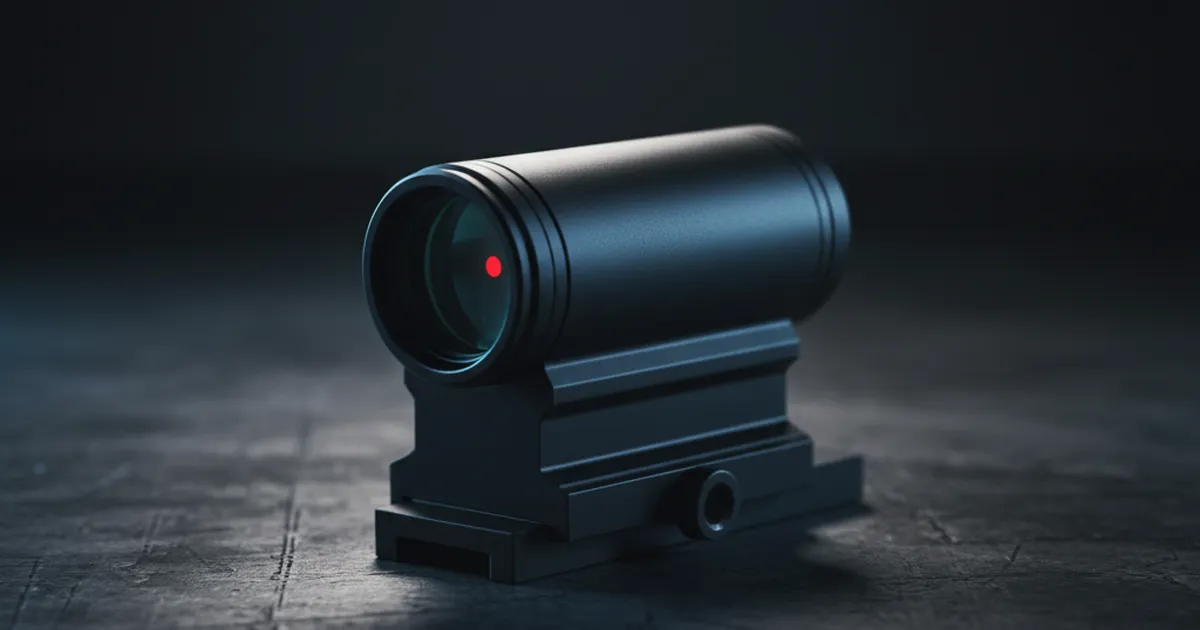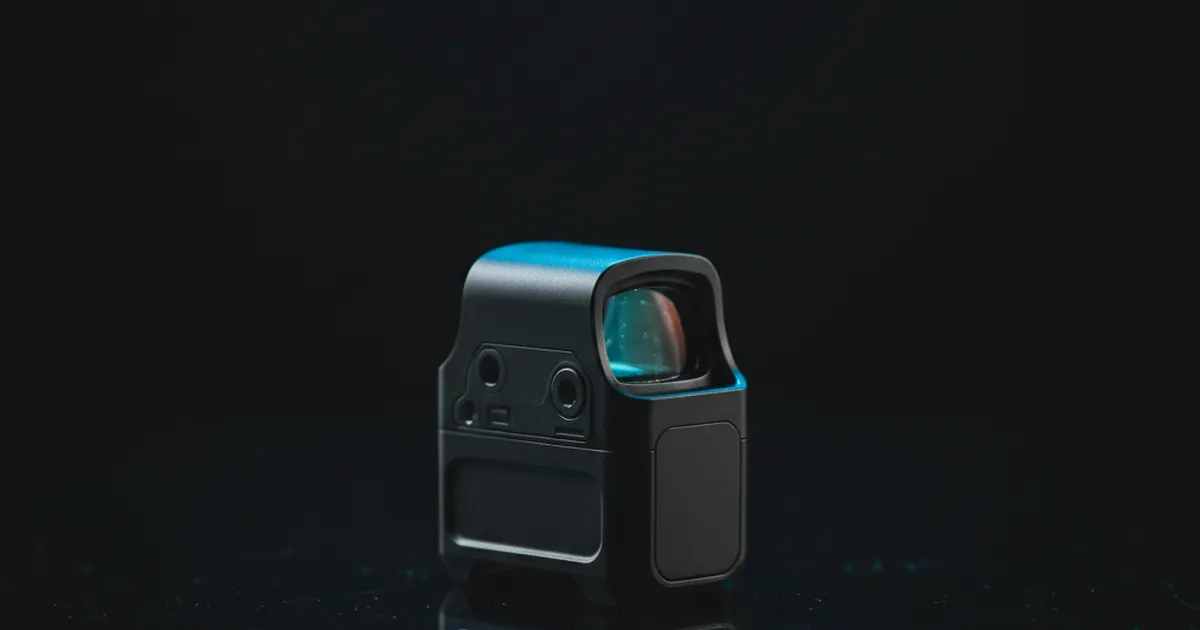

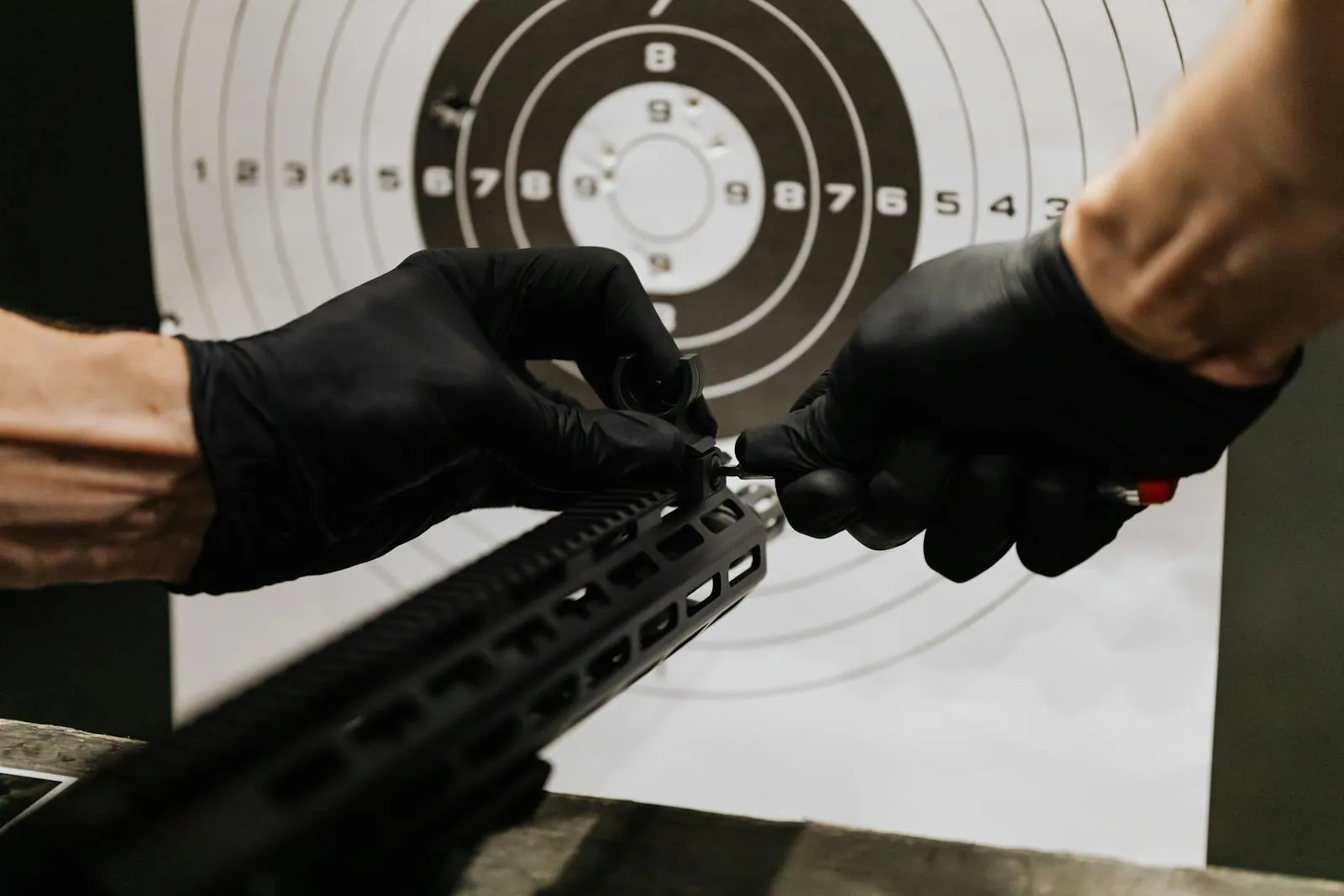


What is the best holographic sight for AR15 2026? A holographic sight is an advanced optic that uses a laser diode to project a three-dimensional reticle into the shooter's field of view. Unlike standard red dots that reflect an LED off a single pane of glass, true holographic sights allow for rapid target acquisition even if the front lens is partially obscured or broken.
While traditional holographic sights have long been the gold standard for close-quarters tactical rifles, modern AR-15 owners are increasingly pivoting to solar-powered, multi-reticle red dots. These newer optics deliver the same lightning-fast sight picture with vastly superior battery life and reliability. If you are building or upgrading a rifle this year, understanding the shift from power-hungry lasers to efficient solar-assisted LEDs is critical to making the right optic choice.
What is a Holographic Sight for an AR-15?
A holographic sight uses a laser diode to illuminate a holographic reticle recorded in three-dimensional space inside the sight window — unlike a standard red dot, which simply projects an LED dot onto a single lens plane.
The practical difference matters on an AR-15. With a red dot, your eye must align with the emitter. A holographic sight lets you shoot accurately even with the reticle partially obstructed, because the reticle exists as a true hologram within the glass.
This gives holographic sights a wider, more forgiving sight picture — a real advantage in close-quarters or dynamic shooting where target acquisition speed is everything.
Key distinction at a glance:
| Feature | Holographic Sight | Red Dot Sight |
|---|---|---|
| Reticle Technology | Laser-illuminated hologram | LED projected dot |
| Eye Alignment Required | Minimal | Moderate |
| Battery Life | Shorter (typically 500–1,000 hrs) | Longer (up to 20,000 hrs) |
In 2026, both technologies are mature — your choice depends on mission profile and budget.
Understanding the core technology behind these optics reveals why one of their biggest strengths also creates their most significant weakness.
Why Do Traditional Holographic Sights Drain Batteries So Fast?
Legacy holographic sights burn through batteries quickly because they rely on a laser diode to project a reticle pattern onto a holographic film inside the window. That laser runs continuously, drawing significant current every second the optic is powered on — regardless of whether you're actively shooting or the rifle is sitting on a bench.
The laser diode is the core problem. Unlike an LED-based red dot that emits a simple point of light, a holographic system must power a laser that illuminates a diffraction grating to reconstruct the full reticle image. That process is inherently power-hungry, which is why traditional holographic units typically deliver only around 1,000 hours of battery life on a single CR123A cell.
Compare that directly to modern reflex optics. Solar-assisted red dots with shake-awake technology routinely achieve 20,000 to 50,000+ hours of rated battery life. That's not a minor improvement — it's the difference between replacing batteries every few months versus potentially never replacing them at all during normal use.
Left on at a mid-brightness setting, a traditional holographic sight can exhaust a fresh battery inside roughly six weeks of standby, while a solar-assisted optic with motion-sensing auto-shutoff shows negligible battery drain over the same period.
The practical outcome matters more than the spec sheet. A dual power system pairing solar charging with a coin-cell battery backup and shake-awake technology means your optic is always ready the exact second you pick up your AR-15, but never drains its battery while sitting idle in the safe.
| Optic Type | Power Source | Rated Battery Life |
|---|---|---|
| Traditional Holographic Sight | CR123A (laser diode) | ~1,000 hours |
| Standard LED Red Dot | CR2032 | ~20,000 hours |
| Solar + Shake Awake Reflex | Solar + CR2032 backup | 50,000+ hours |
For AR-15 owners who store their rifle for home defense or infrequent range use, the battery architecture of the optic is not a minor consideration — it directly determines whether the sight is live when you need it.
Beyond battery life, many shooters turn to holographic sights hoping to cure visual distortions, but the reality of how our eyes process these reticles tells a different story.
Are Holographic Sights Better for Astigmatism in 2026?
No — you do not need a $700 holographic sight to fix astigmatism blurring. In 2026, high-quality glass and multi-reticle systems in mid-range optics deliver nearly identical results at a fraction of the cost.
Why Astigmatism Distorts Red Dots
Astigmatism causes the eye to perceive LED-projected dots as starbursts or smeared blobs. This is a reticle projection issue, not a magnification problem — the dot's light scatters unevenly across an irregular cornea.
Holographic sights project their reticle via laser transmission hologram, which many shooters with astigmatism perceive as sharper. But the gap between holographic and quality LED red dots has narrowed significantly.
What Actually Solves the Problem
Smaller dot sizes reduce starburst spread. A 2 MOA dot produces noticeably less scatter than a 6 MOA dot for the same eye condition — this is measurable, not theoretical.
Multi-reticle systems with a 65 MOA circle paired with a 2 MOA center dot give the same fast-acquisition sight picture that made holographic sights famous, while the circle gives the eye an anchor point that compensates for dot distortion. This is the practical outcome shooters actually need.
Modern LED optics with premium glass coatings are closing the astigmatism performance gap against traditional holographic designs.
Side-by-Side Reality Check
| Factor | Holographic ($600–$700+) | Quality LED Red Dot ($130–$250) |
|---|---|---|
| Reticle projection | Laser hologram | LED through glass |
| Astigmatism starburst | Reduced | Reduced with 2–3 MOA dot |
| Multi-reticle option | Limited models | Available on select models |
| Battery life | 300–500 hours typical | Up to 20,000 hours |
If your dot blurs, try a 3 MOA or smaller dot with quality anti-reflective coatings before spending $700. Most shooters find the starburst effect drops to an acceptable level — without touching their budget ceiling.
Once you realize you don't necessarily need a laser hologram for clear vision, the door opens to much more efficient sighting solutions.
What Are the Best Solar-Powered Alternatives to Holographic Sights?
Solar-assisted red dot sights are the most practical answer to battery anxiety in 2026. They deliver a clean, parallax-reduced dot picture similar to a holographic, cost significantly less, and keep running even when your CR123 runs dry.
The key word is assisted — these optics pair a conventional battery with a solar cell. The battery handles low-light conditions; the solar panel extends runtime in daylight, often indefinitely. You get redundancy without carrying spares.
How Solar Red Dots Compare to Traditional Holographics
| Feature | Traditional Holographic | Solar Red Dot |
|---|---|---|
| Battery life (battery only) | 500–1,000 hours typical | Up to 20,000 hours (CR2032) |
| Daylight runtime | Battery-dependent | Effectively unlimited with solar assist |
| Entry price | $400–$700+ | $129.99–$249.99 |
| Reticle type | Holographic pattern | 3 MOA dot |
Top Solar Options Worth Evaluating
AZV QSO-S Solar Red Dot Sight — $129.99. This is the budget entry point. It pairs solar charging with a CR2032 battery and Shake Awake activation. For a shooter who wants to eliminate battery management without spending holographic money, it handles the job.
AZV PCO-S Reflex Red Dot Sight With Solar — $249.99. This is the more capable build. It adds a co-witness channel, Auto-sleep, a 28x17.5mm window, and an RMR-footprint mount. The CR1632 battery handles nights and overcast conditions; the solar cell takes over in daylight. Aircraft-grade 7075 aluminum housing with shockproof construction means it withstands the recoil, drops, and abuse of tactical environments just as well as legacy optics costing three times as much.

The PCO-S 28×17.5mm window is noticeably more usable than budget micro dots, keeping target acquisition fast even with a cheek weld shift. That wide glass makes a real difference in rapid target transitions.
The Bottom Line
If battery anxiety is your main objection to holographic sights, solar red dots solve it directly. The AZV QSO-S handles budget builds; the AZV PCO-S suits shooters who want a larger window and co-witness capability. Neither requires you to spend $500+ to get reliable, long-term performance on an AR-15.
With solar options on the table, putting these two technologies head-to-head exposes exactly what you are paying for.
Holographic vs. Solar Red Dot: Which AR-15 Optic Wins?
For most AR-15 shooters in 2026, a modern solar red dot wins on every practical metric except reticle complexity. Traditional holographic sights project a detailed reticle through laser transmission holography — impressive engineering, but it comes at a steep cost in battery consumption, weight, and price.
A standard holographic unit burns through its battery in roughly 1,000 hours at normal brightness. Solar red dots with shake-awake technology routinely exceed 50,000 hours of battery life — and recharge passively in daylight. That difference is not marginal; it changes how you maintain your rifle.
The Price Gap Is Hard to Ignore
Quality holographic sights start around $700 and climb fast. The AZV PCO-S Reflex Red Dot Sight with Solar runs $249.99 — less than a third of that entry price. For a patrol rifle or home-defense build, that budget gap funds ammunition, training, or a backup optic.
Spec-for-Spec Comparison
| Metric | Traditional Holographic | Solar Red Dot (PCO-S) |
|---|---|---|
| Battery Life | ~1,000 hours | 50,000+ hours |
| Price | $700+ | $249.99 |
| Reticle Type | Complex holographic | 3 MOA dot |
| Power Source | Battery only | Solar + battery |
| Durability Rating | Varies by model | IPX-7 waterproof |
| Window Size | Large (30mm+) | 28×17.5mm |
Compare Specs on Accufire Solar Red Dots
Where Holographic Still Holds Ground
Holographic sights maintain an edge in two scenarios: shooters with severe astigmatism who need a defined reticle shape, and operators running night-vision equipment that requires specific laser compatibility. Outside those use cases, the performance gap narrows considerably.
For general-purpose AR-15 use — range work, competition, home defense — the solar red dot delivers equal or better field performance at a fraction of the cost. The numbers make the argument; the optic just has to back it up downrange.
The practical choice improves your rifle's reliability and leaves a good chunk of your build budget intact.
How Should You Reallocate the $400 Saved on Optics?
Choosing a professional-grade red dot over a legacy holographic sight frees up $400 or more — spend it on ammo, structured training, and a precision mount. That combination builds more real-world capability than any brand name on a receiver.
Here's how to allocate that budget with discipline:
-
Buy a case of 5.56 ammunition (~$180–$220)
A 1,000-round case of quality 5.56 NATO gives you enough volume to zero your optic, run drills, and build consistent trigger mechanics. No optic upgrade matters without round count behind it.
-
Register for a carbine fundamentals course (~$150–$200)
A single-day carbine course from a qualified instructor delivers more measurable improvement than any hardware swap. Structured coursework consistently tightens split times faster than any gear upgrade.
-
Upgrade to a precision optic mount (~$60–$80)
A quality absolute co-witness or lower-third mount locks your zero and eliminates cant-induced misses at distance. A loose or cheap mount wastes every dollar spent on glass above it.
-
Invest in a solar-capable red dot (~$130–$250)
The AZV QSO-S Solar Red Dot Sight at $129.99 delivers battery-independent operation — eliminating the single biggest operational failure point of traditional holographic sights at a fraction of the cost.
| Investment | Estimated Cost | Primary Benefit |
|---|---|---|
| 1,000 rounds 5.56 NATO | $180–$220 | Volume training, confirmed zero |
| Carbine fundamentals course | $150–$200 | Measurable skill improvement |
| Precision optic mount | $60–$80 | Zero retention, proper eye relief |
Hardware has a ceiling. Trigger time and structured repetition do not. The $400 recovered from a smarter optic choice funds both — and that combination outperforms a premium brand name sitting on an under-trained rifle every time.
Conclusion
The search for the best holographic sight for AR15 2026 often leads shooters to a surprising realization: the most practical choice might not be a holographic sight at all. While legacy laser-projection optics offer undeniable benefits for specialized military applications, the massive improvements in solar-assisted LED technology have changed the civilian market. Modern solar red dots deliver the same fast-acquisition sight picture, vastly superior battery life, and rugged durability without the extreme price tag.
By choosing an efficient solar red dot, you eliminate battery anxiety and free up hundreds of dollars to invest in what actually makes you a better shooter: ammunition and professional training. Whether you are setting up a home defense carbine or a weekend range rifle, prioritize reliability and trigger time over expensive legacy technology.
Explore Accufire AR-15 Optics to see the QSO and PCO series in action
Updated April 9, 2026
The Picks: Holographic Benchmarks vs the Solar Alternative
For a true holographic sight, EOTECH's EXPS3 (around $680–$820) is still the duty benchmark, and Vortex's AMG UH-1 Gen II (around $600 street) is the value holographic with a lifetime warranty. Holosun's HS510C (around $300) is the popular open-reflex cross-shop — a wide window with solar backup, though not a true holographic projection. Where the math flips is battery life: a holographic sight drains cells in roughly 1,000 hours, while a solar-assisted red dot like the Accufire PCO-S ($249.99) or QSO-S ($129.99) runs for years at a fraction of the price. Need holographic performance for astigmatism or speed? Buy the EOTECH. Want a never-dead-battery dot for far less? The solar route is the smarter spend.
Why Trust This Guide
Scope & Safe guides are written and reviewed by Marcus Reed and the Scope & Safe editorial team. Our recommendations are built on manufacturer specifications, published third-party data, and recognized testing standards — such as UL and ETL fire ratings — rather than manufacturer marketing, and every price and spec is verified against the seller's live product listing before we publish. We disclose our material connection to the brands we cover, including the Accufire and TactiBeaver stores — see our affiliate disclosure.
Video Guide
Top 5 BEST Holographic Sight You can Buy Right Now [2026] — All About Survival
Top 5 Red Dots for Your AR15 — 1st Shot Tactical
FAQ: Choosing the Best AR-15 Optic in 2026
Are holographic sights still worth buying for an AR-15 in 2026?
For most AR-15 owners, no — not at current price points. Holographic sights offer a theoretically cleaner reticle, but modern solar red dots match their practical accuracy at 25–200 yards. Unless you require the specific reticle design for professional duty use, a quality red dot at $130–$250 delivers equal field performance without the battery drain or premium cost.
What is the best budget holographic sight alternative for an AR-15?
The AZV QSO-S Solar Red Dot Sight at $129.99 is the strongest budget alternative. It runs on solar power with a CR2032 backup, eliminating the battery anxiety common with holographic units. For shooters who want a larger window and co-witness capability, the PCO-S at $249.99 steps up without approaching holographic price territory.
Do holographic sights work better than red dots for astigmatism?
Not reliably. Holographic sights project a reticle differently, which can reduce starburst distortion for some shooters — but results vary by individual. Many shooters with astigmatism report equally clean dots using quality red dots with 3 MOA reticles. Testing both types before purchasing is the only reliable way to determine which works for your vision.
How long do red dot sight batteries last compared to holographic sights?
Red dots last significantly longer. The AZV QSO Red Dot Sight delivers up to 20,000 hours on a single CR2032 battery. Most holographic sights average 500–1,000 hours under comparable brightness settings. For field use, that difference means years of reliable operation versus frequent battery changes.

What magnification works best alongside a red dot on an AR-15?
A 3× magnifier is the standard pairing for AR-15 red dot setups, extending effective range to 300+ yards without replacing the optic. For dedicated precision work beyond 400 yards, a variable power scope becomes the better tool. Most home defense and carbine competition shooters never need magnification beyond 3×.
Is a $500+ holographic sight justified for a civilian AR-15 build?
Rarely. Premium holographic sights are engineered for military and law enforcement use cases where specific reticle patterns and extreme durability are contractual requirements. For civilian range use, competition, or home defense, a well-built red dot at $130–$250 performs the same job. The $250–$400 saved is better spent on professional instruction or quality ammunition.