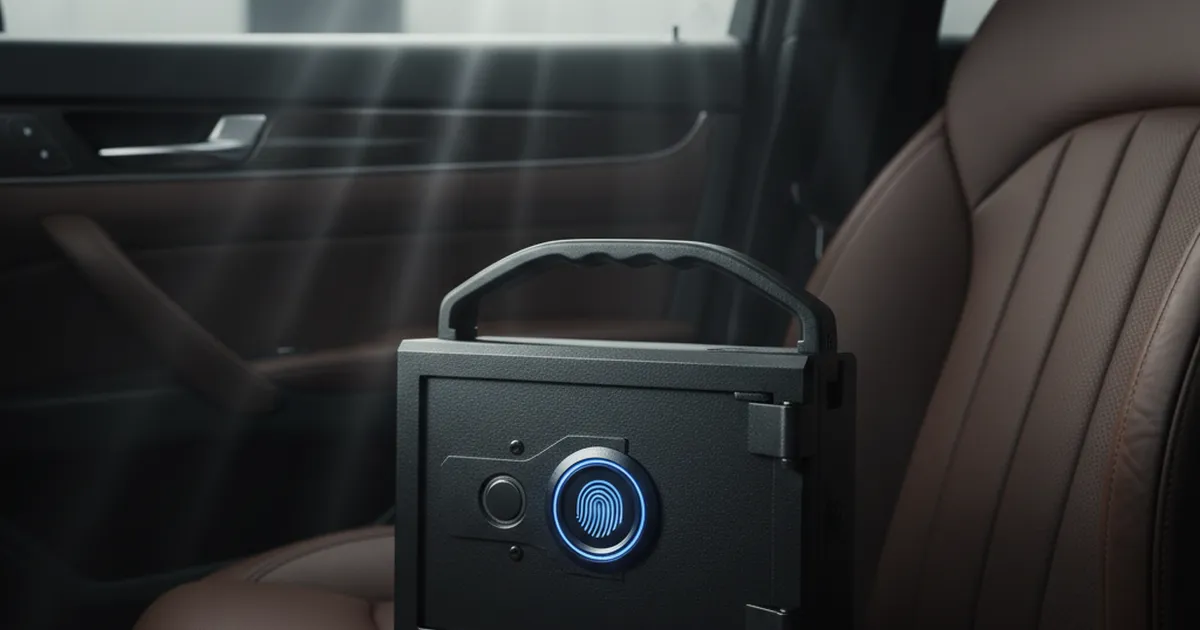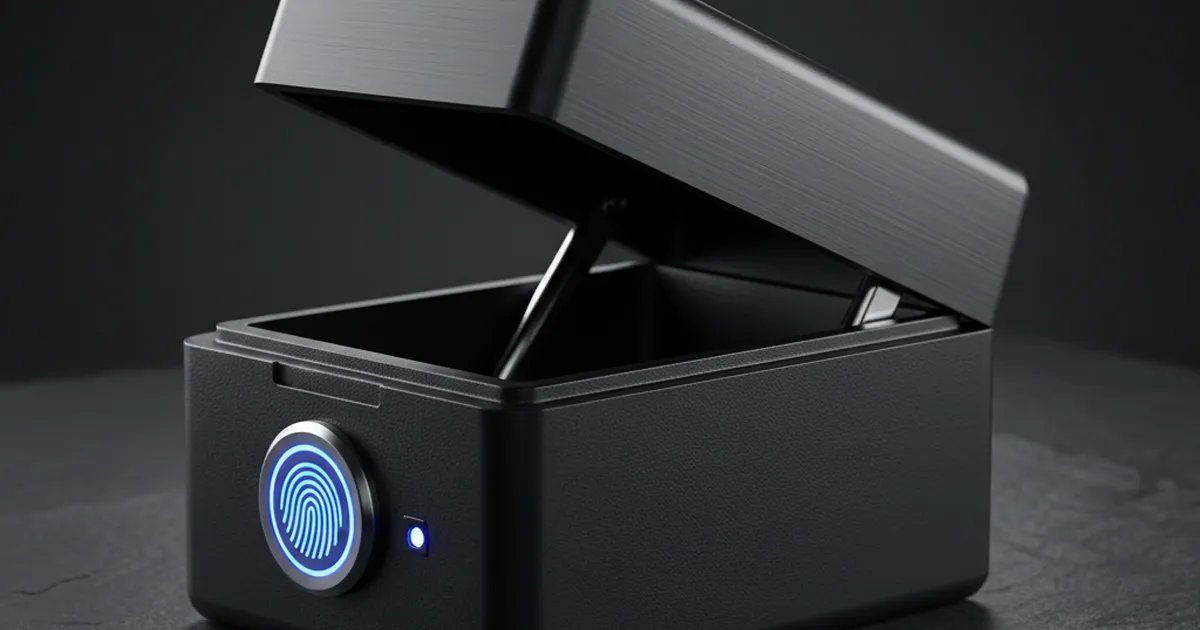

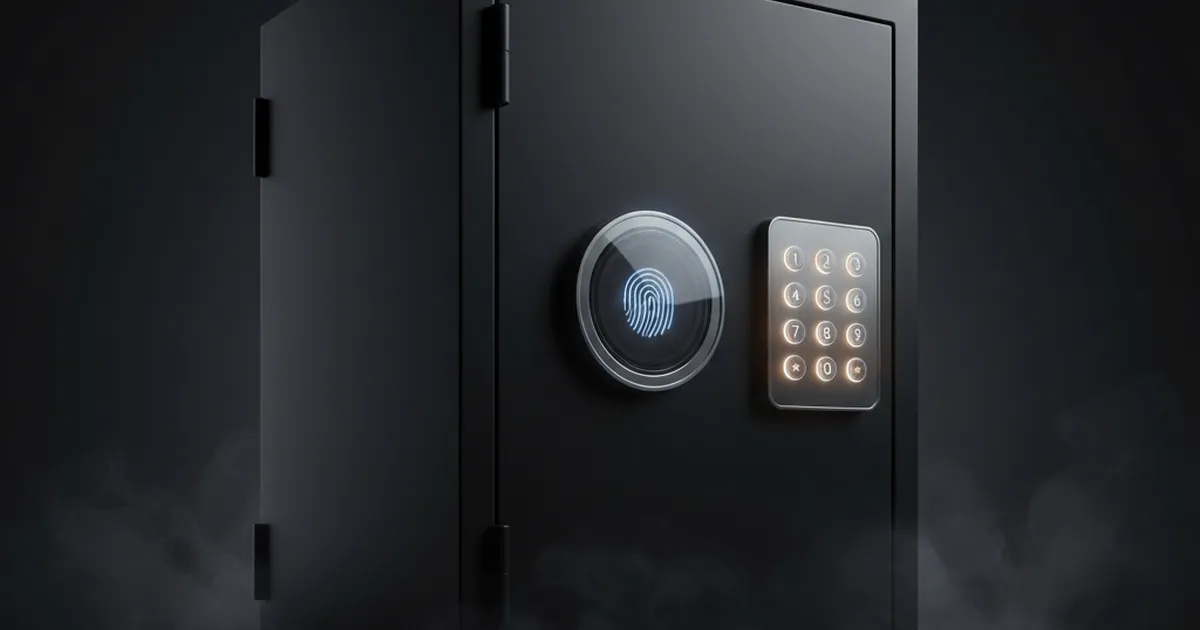


When things go bump in the night, your fine motor skills vanish. Choosing between a biometric vs keypad gun safe isn't about convenience; it's about what your body can physically operate when your heart rate spikes. What is a biometric vs keypad gun safe? It is a comparison of two electronic locking mechanisms used to secure firearms. A biometric safe uses fingerprint scanning technology for access, while a keypad safe requires a memorized numerical PIN code. Both have distinct physiological and environmental failure modes that you must understand before trusting them with your life. In 2026, the technology has evolved, but human physiology remains exactly the same. You need a system that works flawlessly in the dark, under extreme duress, and without hesitation.
What is a Biometric vs Keypad Gun Safe?
The short answer is this: one reads your fingerprint, the other reads your memory. Both open a locked box. How they get there matters a lot when adrenaline is running at 0300.
We may earn a commission from links on this page. This doesn't affect our editorial independence — all opinions are our own.
Key Takeaways
- Access method: Biometric safes scan a physical trait (usually a fingerprint) and typically actuate in 1-2 seconds; keypad safes require entering a 4-6 digit code to trigger the lock mechanism.
- Reliability trade-off: Keypad entry gives you a definitive mechanical actuation that doesn't rely on reading biological traits — useful when hands are wet, cold, or injured.
- Battery dependency: Both types run on batteries; neither is immune to a dead cell at the wrong moment.
- User fit: Your choice depends on how fast you need access and how reliably your fingers present a clean scan under stress.
A biometric gun safe uses a fingerprint scanner to verify identity. Press your enrolled finger against the sensor, and the locking bolt retracts — usually within 1-2 seconds on a quality unit.
A keypad gun safe requires you to punch in a 4-6 digit code to actuate the locking mechanism. No biological reading involved. The code either matches or it doesn't.
Under stress, shooters routinely fumble both types. Sweaty hands confuse fingerprint sensors. Forgotten codes freeze keypad users solid. Neither system is foolproof, which is exactly why understanding the mechanical difference between them is where this decision starts.
Understanding the mechanical differences is just the baseline; the real test begins when your body's alarm system overrides your brain.
How Does Adrenaline Affect Safe Access?
Adrenaline degrades fine motor control fast, and it starts before most people realize their hands are shaking. When your heart rate climbs above 115 BPM — which happens within seconds of a threat stimulus at 0300 — your fingers lose the precise dexterity needed to punch a memorized code on a keypad.
This plays out predictably in stress inoculation drills. Someone who can type a four-digit code perfectly at the kitchen table will fat-finger it twice in a row when their pulse is elevated and the lights are off.
The physiology is straightforward. Your body dumps epinephrine, blood shunts to large muscle groups, and your hands start to tremble. Gross motor movements — a palm slap, a fist, a forearm push — stay functional well past the point where fine motor tasks fall apart. Pressing individual keypad buttons is a fine motor task. Slapping a hand onto a biometric scanner is a gross motor task, and it works even when your hands are shaking hard.
That gap matters at 3 AM. A biometric scanner doesn't care that your hand is trembling; it reads the ridge pattern across the pad. A keypad requires you to hit the right sequence of small buttons in order, under stress, in low light, possibly while managing a scared kid in the hallway behind you.
People regularly forget four-digit codes they've used for two years the moment a simulated threat scenario starts. That's not a memory failure. That's cortisol doing exactly what it evolved to do: narrowing cognitive focus to immediate physical threat, not number recall.
The practical takeaway is this: if you choose a keypad safe, practice the code entry under stress conditions regularly. Set a timer, do twenty jumping jacks, then open the safe in the dark. If you fumble it consistently, that's useful data before a real event, not during one. Biometric access removes the memorization variable entirely, though it introduces its own failure modes around sensor reads — which the next section covers in detail.
While human physiology introduces one set of variables, the environment where you store your safe introduces another entirely.
Why Do Gun Safe Electronics Fail Over Time?
Electronics in gun safes fail for one primary reason: the environment inside your garage or basement is actively hostile to precision sensors. Temperature swings, humidity, and condensation degrade components at the circuit level long before the safe looks broken from the outside.
Safes that work fine indoors routinely start rejecting fingerprints after a single Wyoming winter in an unheated garage. The failure isn't random. It follows predictable physics.
-
Sensor oxidation from humidity
Capacitive fingerprint sensors read the electrical differential between ridge and valley on your fingertip. When ambient humidity stays above 60% for extended periods, a thin oxide layer builds on the sensor's contact surface. The differential reading drops below the threshold the firmware expects, and the safe rejects prints it accepted six months ago. Basements in humid climates are particularly bad for this. A safe rated to IP54 Ingress Protection has sealed sensor housings that resist this moisture intrusion at the component level.
-
Cold-start latency in freezing temperatures
Cheap microcontrollers and capacitors lose charge retention below 32°F. The processor takes longer to initialize, the sensor takes longer to warm up, and you're standing there in the dark waiting for a response that feels like it's never coming. Safes with watchdog timer circuits force a hard processor reset if initialization stalls past a set threshold, which cuts that cold-start delay significantly. Without one, a frozen safe can sit in a boot loop you can't see or hear.
-
Membrane switch wear on keypads
Every keypad press compresses a polyester membrane layer against a contact trace. Manufacturers typically rate these membranes for 100,000 to 1,000,000 actuations depending on build quality. Budget safes use thinner membranes that delaminate at the edges first, whereas commercial-grade units from brands like Liberty Safe use reinforced overlays. The 1-2-3 keys on a four-digit combination wear out faster than the rest, and the failure shows up as a code that works sometimes and doesn't other times.
-
Solder joint fatigue from thermal cycling
A safe stored in a garage cycles through temperature swings repeatedly across seasons. Solder joints expand and contract with each cycle. Over two to three years, micro-fractures develop at the junction between the PCB trace and the component lead. The board tests fine at room temperature but drops a connection when cold. This is one of the harder failures to diagnose because the safe appears functional until it isn't.
Educational Resource: Environmental degradation is the silent killer of electronic access. Learn how Vaultek engineers hybrid safes to combat humidity and thermal cycling.
The practical takeaway here: if your safe lives anywhere that isn't climate-controlled, the IP54 rating and watchdog timer circuit aren't marketing specs. They're the difference between a safe that initializes at 15°F and one that leaves you locked out when it matters.
Environmental wear sets the stage for failure, but how these mechanisms perform under immediate physical stress is what determines your survival.
Biometric vs Keypad: Which Fails Faster Under Stress?
Biometric scanners fail faster under stress, and the failure mode is harder to work around. A keypad gives you a wrong-entry lockout after a set number of attempts; a biometric scanner can reject you on the first try if your finger is wet, dirty, or swollen from cold.
The core issue is the FRR/FAR trade-off. False Rejection Rate (FRR) is how often the scanner locks out a legitimate user. False Acceptance Rate (FAR) is how often it lets in the wrong person. Manufacturers tune these algorithms against each other — tighten security to lower FAR, and FRR climbs. That means the same setting that keeps intruders out is the one that rejects your sweaty thumb at 0200.
Sweat alone can spike FRR on optical scanners by a significant margin. Add blood, range grime, or a minor cut across your fingertip and the scanner is reading a different ridge pattern than the one it enrolled. Users commonly fail biometric entry on safes they own, with fingers they enrolled themselves, simply because they came off a hot range.
| Failure Mode | Biometric Scanner | Keypad |
|---|---|---|
| Wet or sweaty hands | High FRR — frequent rejection | Minimal impact on entry |
| Dirty or cut finger | Ridge distortion causes misread | No effect |
| Adrenaline-induced fine motor loss | Finger placement goes off-center | Fat-finger errors on small buttons |
| Low-light operation | Placement error increases | Backlit keypads largely solve this |
| Cold or swollen fingers | Ridge compression changes scan | Grip and press still functional |
Keypads have their own stress failure: muscle memory breaks down under adrenaline. A four-digit code you have punched a hundred times can suddenly feel unfamiliar when your hands are shaking. The fix is deliberate over-practice — run the code dry at least weekly so it drops below conscious thought.
The single best habit on any biometric safe: enroll multiple fingers on any biometric safe you own. Your dominant index, your dominant thumb, and at least one finger from your non-dominant hand. Most mid-range safes allow four to ten stored prints. Use them. That alone cuts real-world FRR substantially without touching the FAR setting.
The honest summary is that keypads are more mechanically predictable under stress. Biometrics are faster when conditions are ideal, but ideal conditions are exactly what a defensive scenario strips away. If you run a biometric safe, treat the keypad backup as your primary and the scanner as a convenience feature for calm, everyday access.
Because both systems have distinct vulnerabilities under stress, the industry's most reliable solution combines them into a single unit.
What is Hybrid Dual-Authentication?
Hybrid dual-authentication means a single safe ships with two independent entry methods — a biometric scanner and a mechanical keypad — wired so that either one opens the lock. If one path fails completely, you still have a working door.
The mechanical keypad backup is an engineering necessity because biometric sensors have a real failure rate. Sweat, blood, a cut across your fingertip, or a sensor that's logged too many partial reads and corrupted its template — any of those can lock you out of a biometric-only unit at the worst possible moment. A keypad doesn't care about your skin condition.
The biometric side on better units uses a capacitive sensor with a sub-0.5-second response time and liveness detection. That liveness check reads the electrical current in live skin, which stops a lifted print from spoofing the scanner and also tolerates slightly off-center finger placement during a rushed, one-handed entry.
A biometric entry will fail after a hard sprint when hands are soaked. The keypad is what saves that scenario. Four to six digits entered by feel in low light is a skill you can actually train and repeat under stress.
The hybrid logic itself is straightforward: both inputs route to the same solenoid or motor. There's no hierarchy where one method overrides the other. You pick whichever works given your current conditions.
If you're shopping for a bedside defensive safe, look for units that advertise true dual-authentication rather than a biometric primary with a physical key override. A key is slower and easier to lose. A keypad you've memorized is immediate tactile redundancy — exactly what the engineering is supposed to deliver.
The standing advice: enroll two fingers on the biometric, memorize the keypad code, and test both methods monthly. That's the whole maintenance protocol.
Balancing these redundancies is the key to a foolproof home defense setup.
Conclusion: The Verdict
For home defense storage, the physiological and environmental data points the same direction: a quality keypad safe with a backup key override is the more reliable daily driver. Biometric sensors degrade with sweaty or cold fingers, and adrenaline-induced fine motor loss hits fingerprint reads harder than it hits a memorized PIN sequence.
That said, people fumble both types under pressure. The safe type matters less than drilling your access sequence until it runs on muscle memory, not conscious thought.
If budget allows, go hybrid. A unit that accepts both fingerprint and PIN gives you a fallback when one method fails at 0200 with your heart rate at 140 BPM. Dead batteries and sensor drift are real failure modes, so check the battery every six months and keep a spare CR123A taped inside the cabinet.
There is one repeatable truth: the safe you can open under stress is the right safe. Buy accordingly.
Last Updated: April 2026
The Picks: One for Each Side
Want a recommendation for each approach? For biometric quick-access with fire protection, the TactiBeaver GLACIER S ($449.99) opens on a fingerprint and carries a 30-minute fire rating. If you prefer the cold-weather reliability and zero battery dependence of a keypad, the TactiBeaver BASALT XS ($307.99) delivers a 60-minute, 1,700°F fire rating with a keypad lock. Both back the primary lock with a secondary entry method — which, as this guide argues, is the rule that matters more than the biometric-vs-keypad debate itself.
Why Trust This Guide
Scope & Safe guides are written and reviewed by Marcus Reed and the Scope & Safe editorial team. Our recommendations are built on manufacturer specifications, published third-party data, and recognized testing standards — such as UL and ETL fire ratings — rather than manufacturer marketing, and every price and spec is verified against the seller's live product listing before we publish. We disclose our material connection to the brands we cover, including the Accufire and TactiBeaver stores — see our affiliate disclosure.
Frequently Asked Questions
Which opens faster in a real emergency — biometric or keypad?
Under stress, a quality keypad safe with a memorized 4-digit PIN typically wins. Biometric readers average 0.5–1.5 seconds on a clean, dry finger — but sweaty or trembling hands can push that to 3–5 seconds or trigger a lockout. In low-light access drills, keypad entry holds up more consistently when fine motor skills degrade. If you train the PIN sequence like a draw stroke, muscle memory carries you through.
How long do batteries last in a biometric gun safe?
Most biometric safes run on four AA batteries and last 12–18 months under normal home use — roughly one to two access events per day. Keypad safes draw slightly less current per activation and can stretch to 18–24 months on the same cell count. Check the battery indicator every six months and replace before it sags. A low battery on a biometric reader causes false rejections before it causes a full lockout, so don't wait for the warning beep to act.
Can fingerprint safes be fooled by fake prints?
Budget optical sensors — the kind found in safes under $150 — have been defeated with lifted prints and gelatin molds in documented security research. Capacitive sensors used in mid-range and higher safes read sub-dermal electrical patterns, which are significantly harder to spoof. No optical-only biometric safe should be relied on as your sole security layer. If biometric is your primary method, spend the extra money for a capacitive sensor and keep a PIN backup active.
What happens if my keypad safe battery dies completely?
Most keypad safes include an external 9V battery terminal on the front panel — press a fresh battery against the contacts and the keypad powers up long enough to enter your code. Every reputable brand ships with this feature; if yours doesn't show it in the manual, that's a red flag worth acting on before you need it at 2 a.m. Keep a spare 9V taped to the back of the safe or in a nearby drawer. Dead battery access takes about 30 seconds once you know the procedure.
Is a hybrid biometric-plus-keypad safe worth the extra cost?
For most home defense setups, yes. Hybrid safes typically run $40–$80 more than single-method units, and that premium buys you a fallback when one system fails. Biometric readers degrade with humidity and skin changes over time; keypads can be forgotten under extreme stress. Having both means a failure in one method doesn't lock you out of your firearm. The standing advice: if your budget allows a hybrid, buy it and train both access methods equally.
How many fingerprints can a biometric safe store?
Entry-level biometric safes store 10–20 fingerprint templates; mid-range models handle 30–100. Store your dominant index finger, your non-dominant index finger, and your dominant thumb at minimum — that covers you if one hand is occupied or injured. Avoid maxing out storage with every household member's prints unless the safe supports user-level access logs. More stored prints means slightly longer scan-to-match processing time on older optical hardware, though most modern capacitive sensors resolve this in under a second regardless of template count.