
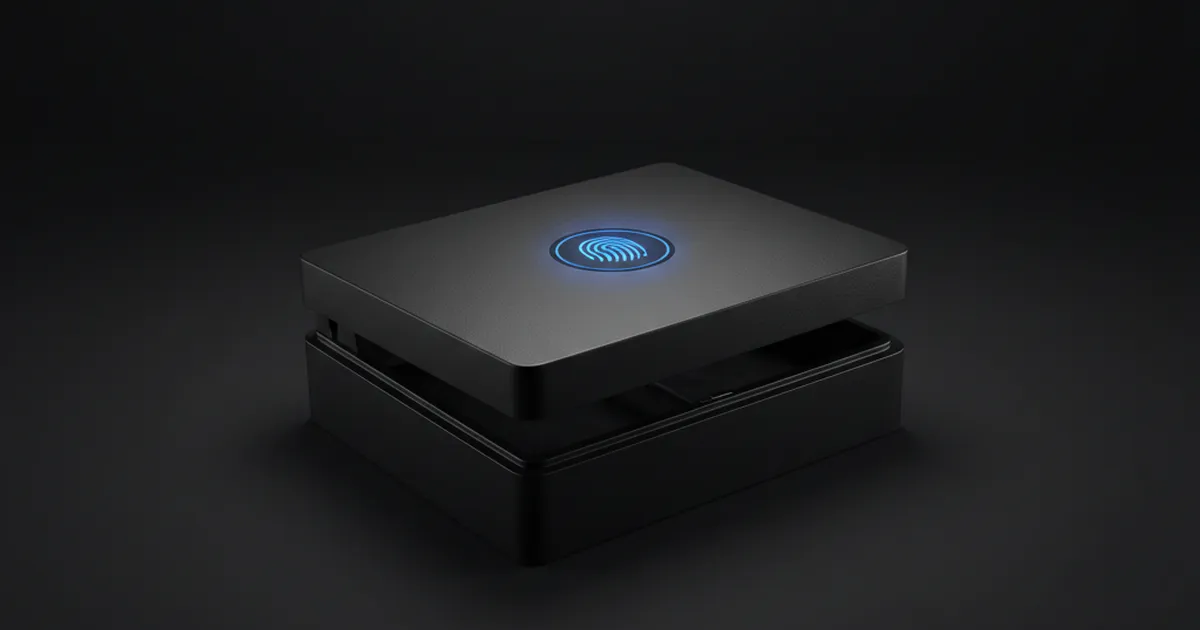


A defensive handgun locked behind a 30-second PIN sequence is not a defensive handgun — it's a paperweight with a fingerprint sensor sticker. And a safe that opens in half a second but melts through its welds at 900°F is worse: it gives you a false sense of protection right up until it doesn't. Every biometric-plus-fireproof safe has to thread this needle, and most of them pick a side and fail the other.
A fireproof biometric handgun safe is a compact security vault engineered to do two things that work against each other: resist 1,200°F+ interior temperatures long enough to survive a typical structure fire, and open on a fingerprint in under one second under stress. The engineering trade-off between insulation mass and latch speed is what separates the 2026 top tier from the marketing fluff.
What is a Fireproof Biometric Handgun Safe?
We may earn a commission from links on this page. This doesn't affect our editorial independence — all opinions are our own.

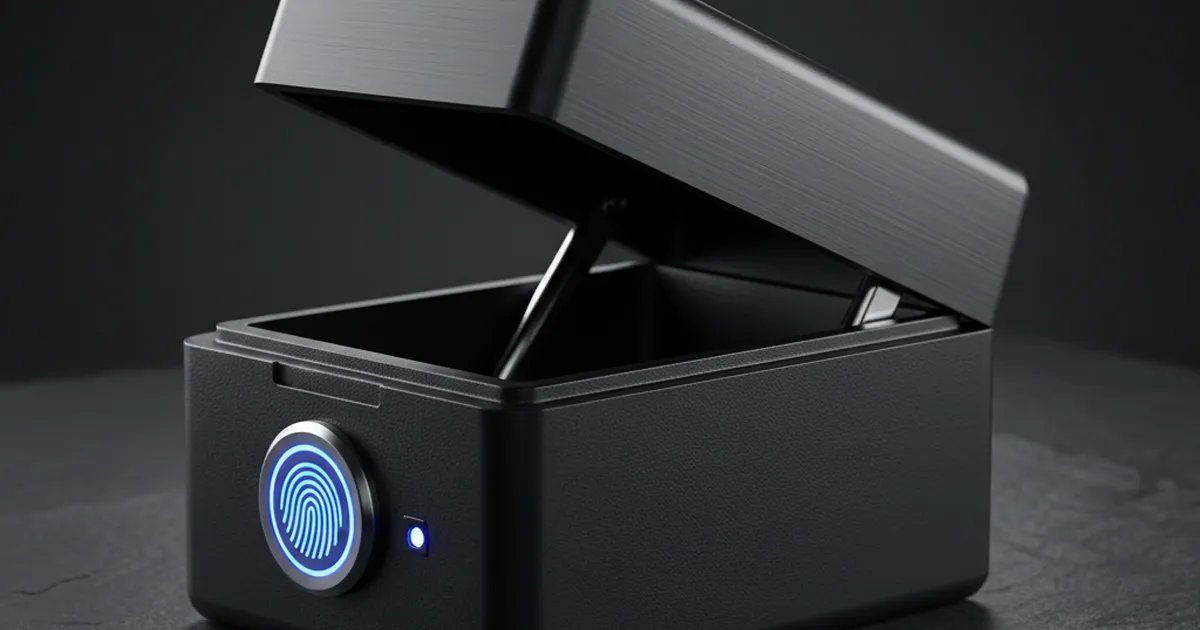
A fireproof biometric handgun safe is a compact steel vault that combines fingerprint-based entry with fire-rated insulation — so it blocks unauthorized hands and survives a house fire without you fumbling for a key or a combination at 0300.
The biometric side handles access. A fingerprint scanner reads your enrolled print and releases the lock in under a second. No key to lose, no code to blank on under stress. Most units store multiple fingerprints, so a spouse or trusted family member can get in just as fast.
The fireproof side is a separate engineering problem entirely. Thick steel alone won't cut it. Quality models layer in fire-resistant insulation between the walls to hold interior temperatures below the threshold where ammunition or documents ignite. The GLACIER S, for example, is rated to resist temperatures up to 1,200°F for 30 minutes — that spec matters when the average residential fire burns around 1,100°F.
Put both together and you get a safe that secures your firearm from unauthorized users and catastrophic fires while allowing sub-second entry. That's the whole product category in one sentence.
Key Takeaways
- Dual protection: These safes combine fingerprint access with fire-rated insulation — two separate systems solving two separate problems.
- Speed matters: Biometric entry typically clocks under one second, which is the point for a defensive firearm safe.
- Fire ratings are specific: Look for temperature thresholds and duration together — a 30-minute rating at 1,200°F tells you something real.
- Backup access is standard: Most models include a keypad or physical key override for when the fingerprint reader fails or batteries die.
- Size and placement vary: Compact models like the GLACIER S (0.75 cu ft) fit a nightstand; larger units handle documents and additional valuables alongside a handgun.
Understanding the basics is just the start; the real challenge lies in how these two protective features fight against each other.
The 'Fireproof Paradox': where heavy insulation kills latch speed
Fireproof insulation adds weight and thickness to a safe door — and that extra mass works directly against the biometric latch's ability to release cleanly and fast. The heavier the door, the more precise the hinge alignment needs to be. When that alignment drifts even slightly, the door binds.
Here is the core problem: most budget fireproof safes use dense fireboard panels packed between steel layers. That fireboard is heavy. A door that weighed 8 lbs without insulation can push past 20 lbs with it. The small solenoid or servo motor driving the biometric latch was often engineered for the lighter version.
How Insulation Weight Warps the Mechanism
Over time, door sag from that added weight pulls the latch bolt out of alignment with the strike plate. You get a clean fingerprint read, the motor fires — and the door doesn't move. You're standing there at 0200 pulling on a handle that won't budge.
Heavy safe doors create a stress-under-fire scenario where the physical weight of the door fights the operator during rapid deployment. A latch that works fine in a calm test can feel like it's welded shut when your hands are shaking.
The structural warping issue compounds this. Fireboard expands slightly with humidity changes. In a compact safe, that expansion puts lateral pressure on the door frame, which tightens the door gap and adds friction the biometric motor was never designed to overcome.
Where Compact Sizing Changes the Equation
A 0.75 cubic foot footprint — like the GLACIER S at $450 — provides enough thermal mass for half-hour fire protection without requiring a door so heavy it defeats the latch. The thermal mass is distributed across the body panels, keeping door weight manageable enough for the biometric mechanism to operate reliably.
Bigger is not automatically safer here. A larger safe with thicker door insulation can actually perform worse on quick access than a well-engineered compact unit, because the latch-to-door-weight ratio degrades faster as you scale up.
The fix is buying a safe where the manufacturer engineered the latch motor and hinge spec after the insulation was added — not before. That sequencing matters more than the fire rating number on the label.
Overcoming door weight is a mechanical hurdle, but the electronic side—specifically how the scanner reads your print—is equally critical for rapid deployment.
Capacitive sensors and the false-rejection problem
Capacitive fingerprint sensors read the electrical charge differential between your ridge patterns and the sensor surface. Sweat, moisture, and minor skin oils don't block that signal — they actually help conduct it. That's the core reason capacitive technology handles wet or cold hands far better than optical alternatives.
Why Optical Sensors Fail Under Stress
Optical scanners work by photographing your fingerprint with light. When your palms are sweaty from an adrenaline spike, that moisture scatters the light and the image comes back blurry or unrecognized. The safe rejects you. At 0200 with your heart rate at 140, that rejection is a serious problem.
Optical-based locks routinely fail after a high-stress drill. Hands shaking, palms damp — the scanner just blinks red. Every time.
How Capacitive Technology Closes That Gap
Capacitive sensors map the tiny electrical variations across your fingertip's ridge-and-valley structure. Moisture changes the conductivity slightly but doesn't erase the pattern. The sensor still reads a recognizable map of your print.
Capacitive sensors consistently outperform optical ones when hands are wet or cold — conditions that are exactly what you'll face in a real defensive scenario.
Cold Hands Are Also a Real Factor
Cold skin reduces surface conductivity, which does slow capacitive reads slightly. But optical sensors fail harder in the cold because reduced skin oils mean less light reflection from ridges. Capacitive still wins that comparison.
The practical fix either way: register multiple fingers during setup. Register your dominant index finger, your non-dominant index finger, and your dominant thumb. Three enrollment points cut false rejection rates significantly regardless of sensor type.
When you're evaluating a quick-access safe, ask specifically whether it uses capacitive fingerprint sensor technology. Higher resistance to moisture and oil buildup means your print reads correctly even when your hands are sweaty or cold — and that spec matters more than the safe's finish or interior lighting.
While the scanner gets you in quickly, the materials sealing the door dictate whether your firearm survives the heat.
Intumescent seals vs. standard gaskets, benchmarked
A standard rubber gasket sits passively around the door frame — it compresses when the door closes and creates a basic dust and moisture barrier. That's it. Under fire conditions, rubber softens, shrinks, and eventually fails, leaving a gap that funnels heat and smoke directly into the interior.
An intumescent seal works differently. It contains a graphite-based compound that expands dramatically — sometimes 8 to 10 times its original volume — when temperatures climb past roughly 250°F. That expansion physically fills the door gap and creates an airtight barrier before the interior temperature can spike.
The practical difference matters more than most buyers realize. A house fire burns at temperatures well above 1,000°F. A rubber gasket at that temperature is gone in minutes. An intumescent seal is just getting started.
| Feature | Standard Rubber Gasket | Intumescent Seal |
|---|---|---|
| Heat response | Softens and degrades | Expands to seal the gap |
| Smoke protection | Minimal — gaps open as rubber fails | Strong — expansion blocks smoke infiltration |
| Effective temperature range | Below ~200°F | Activates at ~250°F, protects well beyond |
| Typical safe tier | Budget and entry-level models | Mid-range and fireproof-rated models |
If you're worried about the gap around a quick-access door letting heat ruin your firearm, that worry is legitimate — and it's specifically the gap a rubber gasket cannot address under real fire conditions. The intumescent seal is the engineering answer to that problem.
The first thing worth checking on any fireproof safe is whether the spec sheet mentions intumescent door seals by name. Vague language like "fire-resistant gasket" usually means rubber. A safe rated to withstand 1,200°F for 30 minutes — like the GLACIER S at $449.99 — only delivers on that rating if the door seal can actually hold under those conditions.
Bottom line: the wall thickness and fire board insulation get all the marketing attention, but the door seal is where most cheap fireproof safes quietly fail.
Once you've secured the exterior against heat and unauthorized entry, the next step is organizing the interior for a flawless draw.
How to Optimize Interior Modularity for a Rapid Draw?
Position your handgun so your firing grip lands the same way every single time the door opens. That one principle drives every interior configuration decision worth making.
A common complaint is reaching into the safe in the dark and fumbling because the gun shifted. That's a foam problem, not a safe problem. A loose interior lets the pistol migrate — and a half-inch of movement at 0300 costs you a full second of fumbling.
Step-by-Step Foam Configuration
- Cut foam to your exact frame. The modular FLINT foam interior from TactiBeaver allows you to customize the layout to fit your specific handgun and optic setup, preventing the firearm from shifting during a rapid draw. The Customized Foam for FLINT Bedside Handgun Safe runs $19.99 — cheap insurance for a reliable index every time.
- Orient the grip toward the door. Your hand should travel in a straight line from the biometric pad to the grip. Any angle forces a wrist adjustment under stress — consistent firearm indexing and grip clearance are what separate a practiced draw from a panicked grab.
- Clear space around the trigger guard. Foam that crowds the guard creates drag on the draw stroke. Leave at least a finger-width of clearance on both sides.
- Account for your optic height. A red dot adds height to the slide. If your foam cutout was made for a stock pistol, the optic will catch on the edge. Recut or add a riser layer.
- Test in the dark. Close your eyes, open the safe, and establish your grip. If you have to adjust your hand position even once, the foam layout needs work.
One more thing worth repeating: don't store a spare magazine directly beside the pistol unless the foam separates them completely. Loose gear touching the frame is just another fumble waiting to happen.
A perfectly configured interior only helps if the vault itself is staged in the right location for your specific defensive plan.
Scenario-Based Selection: Bedside vs. In-Wall
The answer depends on one question: do you need the gun within arm's reach while you're horizontal, or do you need it hidden from anyone who walks through your front door? Those are different problems, and they need different solutions.
Bedside Safe: Who It Suits
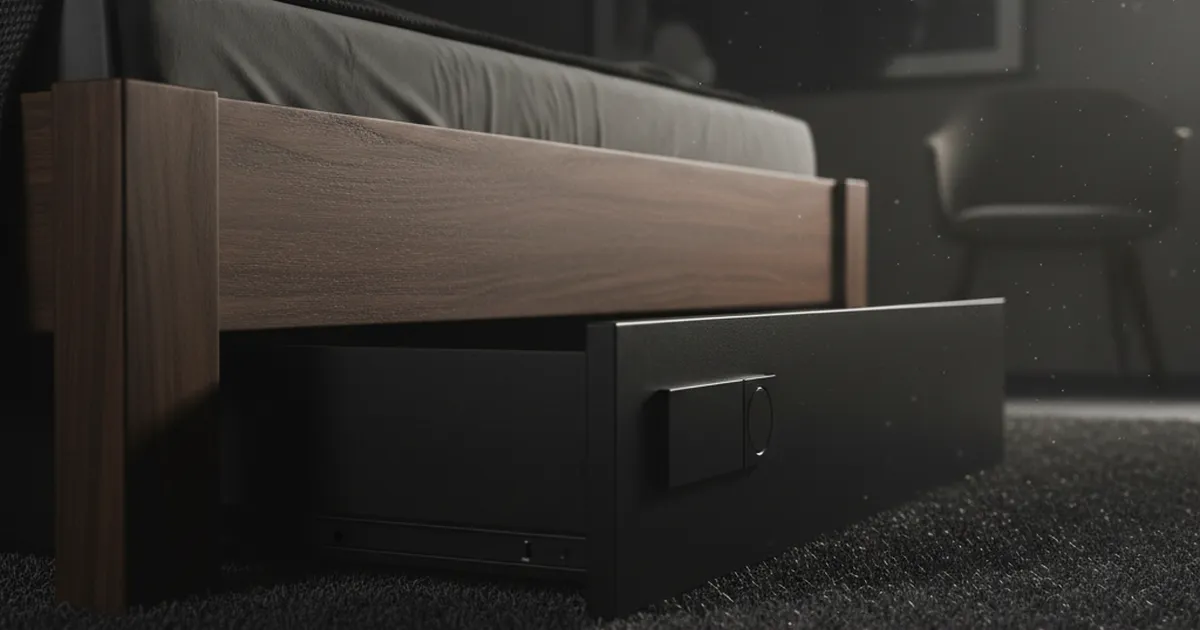
If your primary concern is 0300 access — groggy, disoriented, maybe one eye open — a bedside unit wins. You want it at mattress height, within a natural reach arc, with a biometric reader that doesn't require you to sit up straight and aim your finger perfectly.
The tradeoff is visibility. A bedside safe sitting on your nightstand tells every house guest, every repair tech, and every curious teenager exactly where your firearm lives. That's a real exposure, and it's an easy one to overlook.
In-Wall Safe: Who It Suits
If concealment from intruders and household visitors matters more than shaving half a second off your draw, an in-wall option solves the "where do I mount this" problem by hiding the safe completely behind drywall. The SLATE Biometric Wall Gun Safe ($179.99) mounts between standard 16-inch stud centers — flush with the wall, invisible until you open it, and still at eye level for biometric access.
The limitation is installation commitment. You're cutting drywall. That's not reversible in five minutes, and renters should think twice.
Quick Comparison
| Factor | Bedside | In-Wall |
|---|---|---|
| Nighttime access speed | Fastest | Slightly slower (you must stand) |
| Concealment from intruders | Low | High |
| Installation effort | Minimal | Requires drywall work |
| Renter-friendly | Yes | No |
Pick bedside if speed from a sleeping position is your scenario. Pick in-wall if you want the safe's existence unknown to anyone who doesn't already know it's there.
Conclusion: The Verdict on Fireproof Quick Access
Fire protection and biometric speed are not mutually exclusive — but you pay a real price to have both. The insulating mass that keeps your firearm alive through a house fire is the same mass that adds weight, cost, and potential sensor complications. Accept that trade-off going in, and you'll pick the right safe. Ignore it, and you'll buy twice.
The practical answer: match fire rating to your actual risk. A 30-minute rating at 1,200°F covers the statistical majority of residential fires. If you need a full hour, expect a heavier unit and a higher price point — that's the physics, not a sales pitch.
On the biometric side, keep your backup entry method tested and your battery fresh. It's easy to fumble a keypad at 2 a.m. if you haven't touched the safe in three months. Muscle memory and maintenance matter as much as the sensor spec sheet.
Pick the right size for your actual draw path, bolt it down, and train with it. If you are ready to upgrade your defensive setup, start by learning the specs of different models or exploring the range of purpose-built vaults at TactiBeaver to find the perfect balance of speed and security.
Updated April 23, 2026
The Picks: Speed-First vs Fire-Plus-Biometric
Want the fastest, sleekest biometric pistol safe and don't need fire protection? Vaultek's VT20i (around $290–$410) is the category leader — auto-open lid, rechargeable battery, refined app — but it is not fire-rated. Where you need biometric speed and a fire rating in one box (the whole point of this guide), the TactiBeaver GLACIER S ($449.99) pairs fast fingerprint access with a 30-minute fire rating, a combination Vaultek doesn't offer. For a pure bedside quick-access pistol safe on a budget, the TactiBeaver SHALE XL ($79.99) and FLINT ($99.99) cover the basics.
Why Trust This Guide
Scope & Safe guides are written and reviewed by Marcus Reed and the Scope & Safe editorial team. Our recommendations are built on manufacturer specifications, published third-party data, and recognized testing standards — such as UL and ETL fire ratings — rather than manufacturer marketing, and every price and spec is verified against the seller's live product listing before we publish. We disclose our material connection to the brands we cover, including the Accufire and TactiBeaver stores — see our affiliate disclosure.


Watch: biometric fingerprint safes in action
Biometric fingerprint registing #jewellery #security #langger #safe # — Langgersafe
Fingerprint Safe Good or Bad? #gun #gunsafety #safetyfirst — Civilian Tactical
Frequently Asked Questions
Can a biometric handgun safe actually survive a house fire?
Yes, but only if it carries a verified fire rating — not just a marketing claim. Look for UL 72 or ETL certification. A rated safe like the GLACIER S holds up to 1,200°F for 30 minutes, which covers the average residential fire duration. The biometric electronics are the weak point; intumescent seals protect them by blocking heat and smoke from entering the door gap.
Does fireproof construction slow down biometric access?
It can, but a well-designed safe minimizes that trade-off. Fireproof walls add weight and door thickness, which increases swing resistance. The fix is a gas-strut or spring-assisted door. Capacitive fingerprint sensors reading in under one second offset most of the mechanical delay. A poorly designed fireproof safe with a slow sensor stack is a real problem — that combination is easy to fumble under stress.
What happens to the biometric sensor when the battery dies?
The fingerprint scanner stops working entirely — which is why every quality safe includes a backup access method. That means a physical key override or a PIN keypad on a separate power path. Check that the backup key port is accessible externally, not hidden behind the door seal. Replace batteries on a calendar schedule, not when the low-battery alarm finally fires at 0200.
How many fingerprints should I store in a biometric handgun safe?
Store at least two fingers per authorized user — dominant and non-dominant index fingers minimum. Adrenaline affects fine motor control, and you may reach for the safe with your off hand. Most quality biometric safes store 20 or more fingerprint profiles, so there's no reason to limit yourself. Register each finger three to five times during enrollment to improve low-light and stress-condition read accuracy.
Is a fireproof biometric handgun safe also waterproof?
Not automatically. Fire resistance and water resistance are separate ratings. Some safes add a water-resistant gasket, but that's different from a tested IP water ingress rating. If flood risk matters to you — basement placement, for example — verify the spec sheet explicitly lists water resistance and at what depth or duration. Don't assume fireproof means waterproof; the two certifications test completely different failure modes.
Where should I mount a fireproof biometric handgun safe for the fastest access?
Bedside placement — nightstand height or under-bed — gives the fastest access from a sleeping position. Bolt the safe to a stud or floor; fireproof models run heavy, but an unanchored safe is portable for a thief. In-wall options work for daytime access points. Avoid closets unless you've practiced the draw from that position under low light. Placement you haven't rehearsed is placement that will fail you when it counts.