
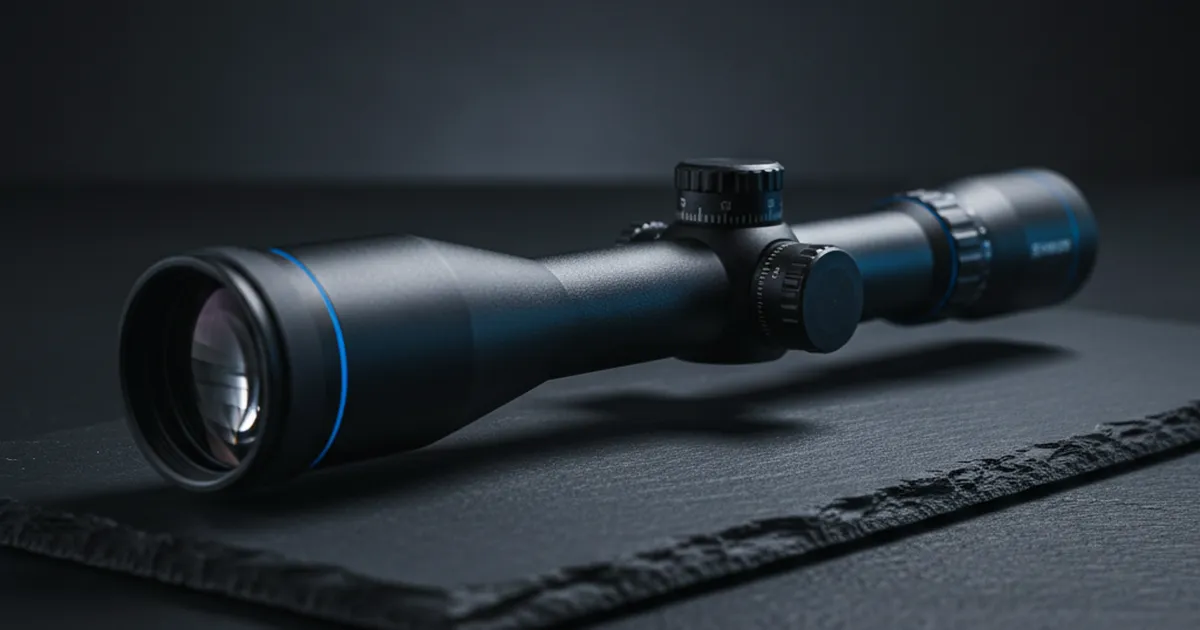


A Nightforce ATACR F1 retails at around $3,200. A Trijicon Tenmile MRAD sits at $2,400. A good mid-tier scope can return to zero within 0.1 mil run after run on a dope-on-paper tracking test. That's the entire debate in one line: the mechanical gap between legacy premium glass and the modern second tier is now measurable in single-digit percentages — but the price gap is still 3–4x.
A Trijicon or Nightforce alternative, in the precision-optics sense, is a rifle scope built on 7075 aluminum with brass-on-brass turret internals and verifiable repeatable tracking — the three mechanical traits that actually separate duty-grade glass from hobby-grade glass. Brand name is not one of those traits.
What Are Legacy Alternatives in Precision Optics?
We may earn a commission from links on this page. This doesn't affect our editorial independence — all opinions are our own.

Here's the straight answer: a true professional-grade alternative earns that label through verified material specs, repeatable mechanical performance, and turrets that track honestly under field conditions — full stop. Brand prestige is not a spec.
Trijicon and Nightforce built their reputations on specific, measurable foundations: aircraft-grade aluminum housings, precision-machined turret assemblies, and glass that holds zero after hard use. Any alternative worth considering has to match those foundations, not just match the price point.
Key Takeaways
- Material standard: Legitimate alternatives use 7075 aircraft-grade aluminum — the same alloy spec that keeps a housing rigid through recoil cycles without shifting zero.
- Turret mechanics matter: Brass-on-brass locking turrets with a zero-stop system are the mechanical baseline; anything softer or sloppier will cost you at distance.
- FFP reticle scaling: First Focal Plane reticles that scale correctly across the full magnification range are a precision requirement, not a premium upgrade.
- Budget is real: Most buyers in this space want to stay under $2,000 and ideally closer to the $1,000 mark — that's the exact price gap where alternatives live.
- Glass quality is the ceiling: Multi-coated FLD glass determines low-light performance; no amount of good marketing fixes a dim, washed-out image at dusk.
The Material and Mechanical Baseline
7075 aircraft-grade aluminum provides the rigid housing necessary to survive field abuse without shifting your zero. That spec appears across legacy brands and newer value scopes alike. The Accufire ATRO-20, for instance, runs a 30mm one-piece 7075 tube at $649.25.
Brass-on-brass turrets are the other half of that equation. Steel-on-aluminum turret interfaces wear unevenly over thousands of adjustments. Brass-on-brass maintains consistent feel and tracking. Turret material and interface design directly affect whether your elevation calls are repeatable at 800 yards or just approximate.
Where Alternatives Actually Compete
The honest answer is that the $700–$1,100 tier has gotten genuinely competitive. Plenty of first-time precision buyers want to stay under $2,000 and ideally closer to the $1,000 mark. That's where alternatives have to deliver — real mechanical specs at a price that doesn't require financing a hunting rifle.
What separates a real alternative from a budget scope wearing tactical clothing is whether the reticle scales accurately across the full magnification range, whether the zero-stop actually returns to zero, and whether the glass pulls usable light at dawn. Those are testable — the difference between a scope that tracks and one that just looks like it should.
Understanding these baseline materials is crucial, but how does that translate to the actual feeling of dialing in a shot? Let's look at why mechanical tracking outweighs subjective glass quality.
Mechanical tracking outweighs "glass feel" on the spec sheet
Mechanical tracking is what keeps your point of impact where you dialed it — and no amount of pretty glass fixes a turret that lies to you. Subjective clarity impressions vary by lighting, eye fatigue, and how much coffee you had that morning. Turret repeatability either measures out or it doesn't.
A common question when building on a Tikka T3X or Bergara: do you really need high-end glass on a value rifle? That question gets answered by internals, not by how the glass looks in a gun-store fluorescent light.
Here is the mechanical reality. When you dial 10 MRAD of elevation and come back to zero, the turret needs to return to the exact same place — every time, under recoil, in cold weather, after the rifle bounces around in a truck bed. That is tracking repeatability, and it lives entirely inside the turret mechanism.
Brass-on-brass turrets guarantee repeatable tracking and impact resistance that matches or exceeds legacy high-markup scopes. Aluminum-on-aluminum or plastic internals wear faster, develop slop, and introduce tracking error that compounds over a shooting session. You will not see that difference through the eyepiece. You will see it on paper at 600 yards.
| Feature | 6061 Aluminum / Plastic Internals | 7075 Aluminum / Brass-on-Brass Turrets |
|---|---|---|
| Tube Strength | Adequate for light use; dents under hard impact | Aircraft-grade; resists deformation under recoil and drops |
| Turret Wear | Develops slop after repeated adjustments | Maintains consistent click feel over thousands of adjustments |
| Tracking Repeatability | Degrades over time; zero shift is common | Returns to zero reliably; auditable click values stay honest |
| Long-Range Confidence | Acceptable inside 300 yards | Required past 500 yards where errors compound |
The ATRO-20's 7075 one-piece tube with brass-on-brass locking turrets and a zero stop is a concrete example of where construction spec directly translates to field performance — not marketing language.
It's common to spend $1,800 on a scope with gorgeous glass and then chase zero for two range sessions because the turrets have soft detents. Meanwhile, a mechanically honest $700 optic on the same line prints consistent groups and lets the shooter actually learn to read wind. Glass feel is a preference. Tracking is a requirement.
The short answer to whether you should put an expensive scope on a budget rifle: yes, if the internals justify the price. A scope with verified brass-on-brass tracking and a 7075 tube will outlast the rifle it sits on and transfer cleanly to your next build. Spend on mechanics first. Glass is a bonus.
Once you have reliable tracking secured, the next physical limitation you will hit at extreme distances is your erector travel, which brings us to tube diameter.
The 34mm Tube Advantage for Extreme Long-Range Engagements
A 34mm tube gives you more internal space for the erector assembly to travel — and that extra travel directly translates to more elevation adjustment range. That's the whole story mechanically. A 30mm tube physically limits how far the erector can move before it runs out of room. When you're shooting a .308 past 800 yards and need to dial 25+ MOA of elevation, a scope that tops out at 20 MOA of usable travel is a problem you can't rings-and-rail your way around.
The physics are straightforward. Wider tube, larger erector housing, more room for the adjustment stack to move. Manufacturers typically gain 15–25% more total elevation travel by stepping from 30mm to 34mm. On a cartridge like .308 Win, that difference can mean the gap between reaching a 1,000-yard target on the turret versus having to hold off the reticle edge and guess.
Across budget-friendly precision optic reviews, shooters consistently flag elevation travel as the first spec they check before price — because a scope that runs out of adjustment at 600 yards is useless on a .308 TRG at 900.
If you're the shooter who just picked up a Sako TRG22 in .308 and wants to stay near the $1,000 mark, tube diameter and usable elevation travel belong on your checklist before glass grade. Here's the honest trade-off: the value alternatives — the Accufire EVRO-12 ($479, 3-12×44) and ATRO-20 ($649.25, 2.5-20×50) — run 30mm tubes, not 34mm. The EVRO-12 offers about 25 mils of total elevation and the ATRO-20 about 35 mils, which reaches most targets a .308 or 6.5 Creedmoor will realistically engage. If you genuinely need the extra adjustment headroom a 34mm tube buys, that's the premium tier (the Nightforce ATACR and Trijicon Tenmile above) — or you add a 20-MOA canted rail to a 30mm scope.
An otherwise solid 30mm scope mounted on a .308 can hit the wall at 700 yards once the available elevation is burned through. Switching to a 34mm-tube optic with a proper zero-stop solves it immediately — no new rifle, no new ammunition, just more mechanical room to work with.
The zero-stop matters here too. More elevation travel is only useful if you can return to zero reliably after dialing up for a long shot. A scope with 20 mils of travel and a solid zero-stop system lets you dial to distance, take the shot, and spin back to a confirmed zero without counting clicks in the dark.
Tube diameter is not glamorous. Nobody posts about it on forums the way they post about reticle illumination or glass clarity. But when you're trying to ring steel past 800 yards on a working budget, it's the spec that actually determines whether your turrets can get you there.
While a massive 34mm tube dominates at 1,000 yards, it can be a liability up close, making secondary sighting systems a practical necessity.
Integrating backup reflex sights on a precision rifle
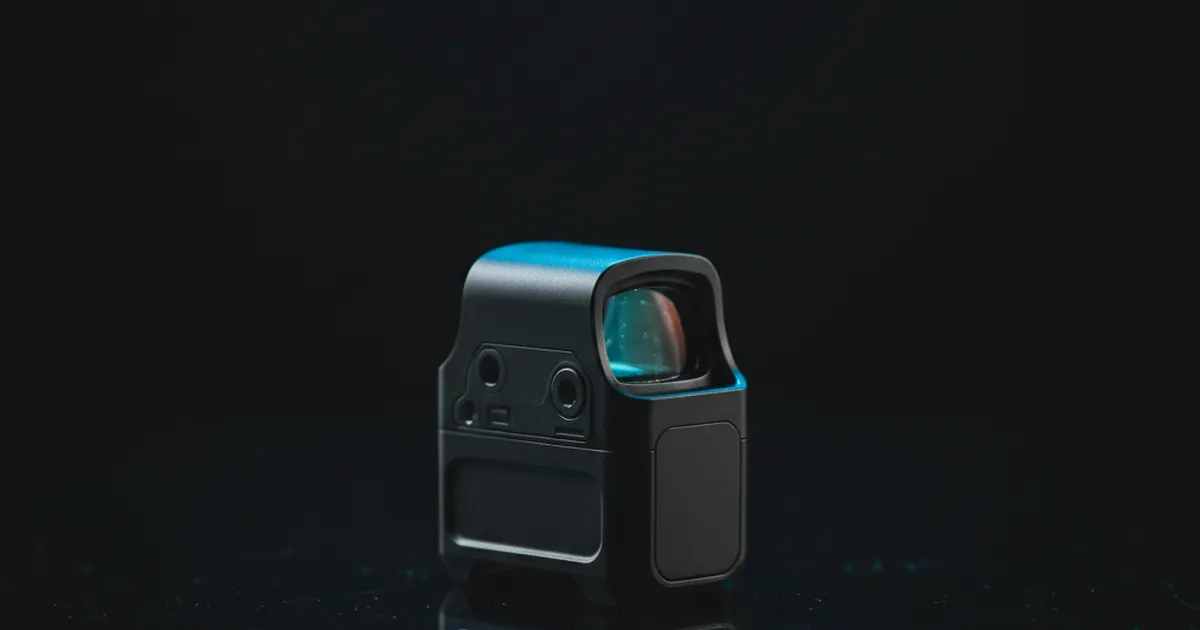
The optimal method is straightforward: mount a standardized-footprint reflex sight on a dedicated offset or top-mounted rail section, zero it independently at close range (typically 50 yards), and choose a unit with shake-awake technology so it's live the moment you need it.
Proprietary footprints create headaches. Stick to RMR or RMSc footprints — they fit most factory-cut mounting solutions without custom machining or adapter plates. That standardization is what lets you swap sights between platforms without re-zeroing from scratch every time.
Step-by-Step Integration
- Select a standardized footprint. RMR-footprint sights drop onto most offset mounts and scope-top rails without adapters. The AZV PCO-S with Base Reflex Red Dot Sight with Solar ($249.99) sits on an RMR footprint and includes a Picatinny rail attachment — that versatility matters when you're moving it between a bolt gun and a carbine.
- Choose shake-awake, not manual-on. The PCO-S uses auto-sleep with shake-awake activation. If the sight hasn't moved in four minutes, it powers down. Pick it up and it's live again instantly. Battery-only sights without this feature will eventually go dark at the worst moment — a common failure during 3-gun transitions.
- Add solar assist where possible. The PCO-S includes solar charging alongside the CR1632 battery. In bright outdoor conditions, solar extends runtime significantly and reduces battery anxiety on extended field days.
- Zero independently at 50 yards. Your primary scope is dialed for distance. The backup reflex needs its own zero for close engagements — 50 yards is the practical standard for most precision rifle setups.
- Verify co-witness or clearance. The PCO-S includes a co-witness channel. Confirm your mount height doesn't obstruct the primary scope's eyebox during transitions.
This exact setup suits carbine-to-rifle transition drills. The 28×17.5mm window on the PCO-S is wide enough for fast acquisition under stress — easy to pick up quickly even without prior red dot experience.

Skip battery-only reflex sights on a precision build. The shake-awake plus solar combination on RMR-footprint sights is the practical standard in 2026 for anyone who wants a backup that actually works when the primary scope is the wrong tool for the distance.
With your primary glass and backup red dot sorted, evaluating the complete package comes down to honest performance metrics.
Final Verdict on Professional-Grade Precision Optics
Spec-driven optics have closed the gap on legacy brands enough that the name on the turret matters far less than the numbers behind it. If a scope tracks true, holds zero under recoil, and gives you repeatable adjustments at your actual shooting distance, it earns its place on your rifle regardless of who made it.
The Reddit long-range community put it plainly when debating budget versus premium glass: the question was never brand loyalty but whether the optic could perform at the distances being shot. That framing is correct. A first focal plane reticle with honest 0.1 MRAD clicks — like what you get from a 34mm tube scope with locking turrets and a zero-stop — does the same math downrange whether it costs $750 or $2,500.
The price most precision buyers target — under $2,000, ideally near the $1,000 mark — is exactly where spec-competitive alternatives live and where value is sharpest right now in 2026.
The bottom line: buy the specs your shooting actually demands. Verify tracking, confirm glass clarity at your magnification range, and stop paying for a badge. The optic that holds zero on shot 400 is the right optic.
— The Scope & Safe editorial team
Conclusion: Trusting Your Mechanics
Finding true precision optics comes down to trusting raw specifications over legacy roll marks. When you prioritize 7075 aircraft-grade aluminum and brass-on-brass turrets, you secure the mechanical repeatability required for long-range confidence. If you want to explore how these specs come together in practice, take a closer look at the EVRO-12's FFP reticle and turret design, or examine how the ATRO-20 pairs its brass-on-brass turrets and zero stop with a mil-comp reticle to simplify your holdovers. Ultimately, your optic should earn its place through reliable, auditable performance on the range. Trust your data, verify your tracking, and shoot with confidence.
Why Trust This Guide
Scope & Safe guides are written and reviewed by Marcus Reed and the Scope & Safe editorial team. Our recommendations are built on manufacturer specifications, published third-party data, and recognized testing standards — such as UL and ETL fire ratings — rather than manufacturer marketing, and every price and spec is verified against the seller's live product listing before we publish. We disclose our material connection to the brands we cover, including the Accufire and TactiBeaver stores — see our affiliate disclosure.
Watch: tracking and reticle deep dives
The 10 Best Precision Rifle Scopes, Picked by a Competitive Long Range Shooter — Outdoor Life
3.9 Mils - Dial or Hold? — T.REX ARMS
Frequently Asked Questions About Precision Optic Alternatives
Can mid-price scopes track as accurately as premium legacy brands?
Yes — with conditions. Scopes in the $500–$800 range with brass-on-brass locking turrets and a true zero-stop can hold repeatable tracking across 10 mils of elevation. The gap shows up at temperature extremes and after hard impacts. Mid-tier FFP scopes can run box drills at 300 yards and return to zero cleanly; what they struggle to replicate is the consistency after a rifle gets dropped hard on a rocky range. For most precision shooters who aren't deploying, the tracking is close enough to matter only at the margins.
What does FFP vs SFP actually mean for precision shooting?
First Focal Plane reticles scale with magnification, so your mil holdovers stay accurate at any power setting. Second Focal Plane reticles are only calibrated at one specific magnification — usually max power. For long-range work where you're dialing magnification between targets, FFP is the practical choice. When selecting a scope for a rifle like the Sako TRG22, the FFP-vs-SFP decision comes down to whether you'll ever need holdovers at reduced magnification. If you're shooting a fixed distance from a bench, SFP is fine. Variable-distance field shooting favors FFP every time.
Is a 34mm tube necessary for a precision rifle scope?
Not always, but it matters at extreme elevation. A 34mm tube provides more internal adjustment range than a 30mm tube — typically 30+ mils of total elevation travel versus 20–35 mils on 30mm designs. If you're shooting past 1,000 yards with a high-BC cartridge, that extra travel lets you dial without burning through your adjustment range — which is why the premium Nightforce ATACR and Trijicon Tenmile run 34mm tubes. The Accufire ATRO-20 uses a 30mm tube with about 35 mils of elevation, which covers most shooting; for distances under 600 yards a 30mm tube is more than adequate and saves weight.
How much should you spend on a scope relative to your rifle's price?
The old "spend equal to your rifle" rule is a starting point, not gospel. A $700 rifle shooting factory match ammo is already more accurate than most shooters can exploit at 500 yards. A $479 FFP scope with solid tracking won't be the limiting factor in that system. Shooters routinely outshoot their optics budgets — the rifle and ammo combination matters more than the brand name on the tube. Spend enough to get repeatable turrets and quality glass transmission. Beyond that, the returns diminish faster than the price tags suggest.
Do solar-powered red dots work reliably in low-light conditions?
Solar-assisted red dots — the kind with a backup battery — work well in most real-world conditions. Pure solar-only designs struggle indoors or under heavy overcast. The AZV PCO-S uses solar supplemented by a CR1632 battery, which is the right architecture: solar extends battery life, the battery handles low-light gaps. For a defensive or competition optic, avoid any sight that relies exclusively on ambient light. The Shake Awake feature on battery-backed designs also means you're not burning power during storage, which addresses the dead-battery problem that solar was supposed to solve in the first place.
What reticle type works best for both hunting and precision target shooting?
A mil-based FFP reticle with a clean center and ranging subtensions handles both jobs well. A mil-comp style reticle covers whitetail season and precision work alike — the subtensions let you range deer-sized targets without a rangefinder when time is short, and the same markings work for wind holds at the range. BDC reticles are calibrated to specific cartridge velocities, which creates problems when you change loads — calibrating a BDC reticle to a non-standard cartridge requires careful calculation at a specific magnification. A mil reticle sidesteps that entirely.